Blog
What Distributors Should Know About the Blood Collection Tube Market in 2026

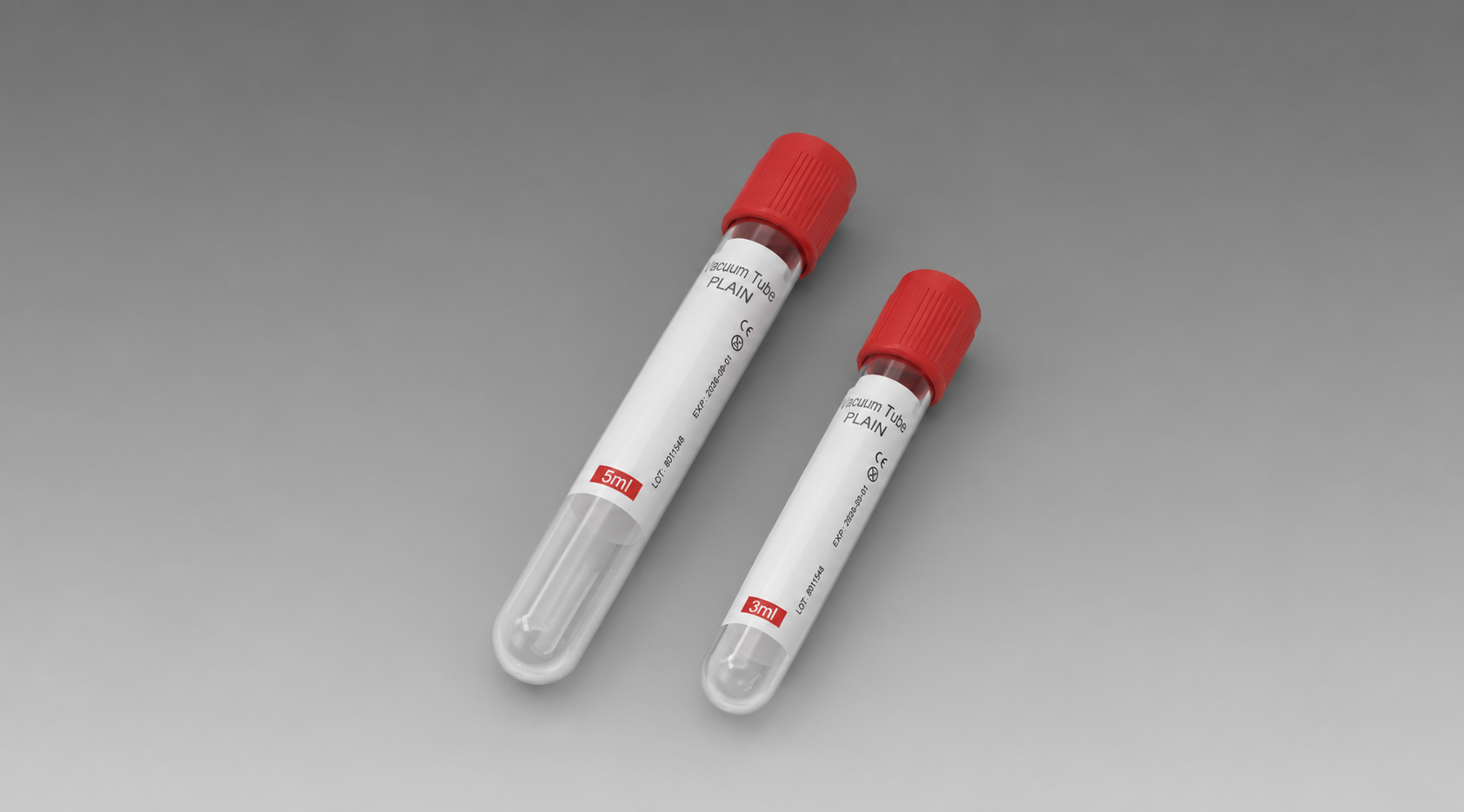
Global demand for blood collection tubes continues to grow at a pace that reflects broader shifts in diagnostic infrastructure — more chronic disease management, more routine testing, and more pressure on hospitals and laboratories to standardize supply chains. For distributors operating in this space, understanding the current market dynamics is worth the time.
Market Scale and Growth Trajectory
The global blood collection tube market is valued at approximately USD 4.5 to 7 billion in 2026, depending on how broadly the segment is defined. Forecasts from multiple research firms point to a sustained CAGR of 6.5–7.1% through the early 2030s. That kind of steady compounding is unusual — it reflects both the non-discretionary nature of diagnostic consumables and the increasing volume of blood-based tests being run globally.
Asia-Pacific is the fastest-growing region, with markets in China, India, and Southeast Asia expanding their laboratory networks significantly. North America continues to hold the largest share, driven by mature infrastructure and high per-capita testing volumes. Europe maintains steady demand, with procurement increasingly influenced by sustainability criteria.
What’s Actually Driving Procurement Decisions
Several factors are shifting what buyers look for in a tube supplier beyond price.
Additive consistency. Whether a tube is used for EDTA-based hematology, serum separation, plasma collection, or coagulation studies, the additive formulation needs to perform reliably across batches. Inconsistent additives translate directly into diagnostic errors, and labs are increasingly enforcing batch traceability requirements as part of procurement contracts.
Regulatory alignment. The FDA’s Quality Management System Regulation, which took effect in 2026, harmonizes U.S. requirements more closely with ISO 13485:2016. For distributors supplying to U.S.-adjacent markets or multi-country accounts, working with a manufacturer that already holds ISO 13485 and CE certification simplifies the compliance paperwork on both sides of the transaction.
Automation compatibility. High-volume hospital labs running automated pre-analytical systems require tubes with precise dimensions, consistent closure force, and barcoding compatibility. This is no longer a premium requirement — it’s increasingly standard for mid-tier lab accounts as well.
Sustainability pressure. European procurement tenders are beginning to include material sourcing and recyclability criteria. Plastic tubes that use recycled or bio-based materials are gaining traction, though cost and performance tradeoffs mean adoption remains selective.
Tube Types by Application
Different tube types serve distinct clinical workflows, and distributors typically need to carry a range:
EDTA tubes (purple/lavender cap) are the standard for complete blood counts and hematology panels. Volume demand is high and consistent across all market segments.
Serum separating tubes (SST) with gel barriers are used for biochemistry and immunoassay panels. They require precise gel formulation and are sensitive to handling conditions.
Sodium citrate tubes (light blue cap) are used for coagulation testing. The blood-to-additive ratio is critical, making vacuum precision a key quality parameter.
Micro-volume tubes are increasingly relevant in pediatric and home-care settings, where full venipuncture volumes are impractical. Demand for this sub-segment is growing faster than the overall market.
Supplier Selection Considerations
Distributors evaluating suppliers should look beyond price per unit. Key factors include batch-to-batch consistency documentation, shelf-life guarantees, cold chain handling capability, and responsiveness to custom labeling or OEM requirements. For markets with local language labeling mandates, a manufacturer’s willingness to accommodate small-run custom packaging is a practical differentiator.
Changfeng Medical manufactures a full range of vacuum blood collection tubes — including EDTA, SST, sodium citrate, and micro-volume formats — with ISO 13485, CE, and MDSAP certification. OEM and private-label options are available for distributors building regional brand presence.
For product specifications or to discuss supply arrangements, use the contact form on this site or reach out directly to our export team.