
Blog
Disposable Biopsy Needles: Market Growth, Clinical Drivers, and What Procurement Teams Are Looking For

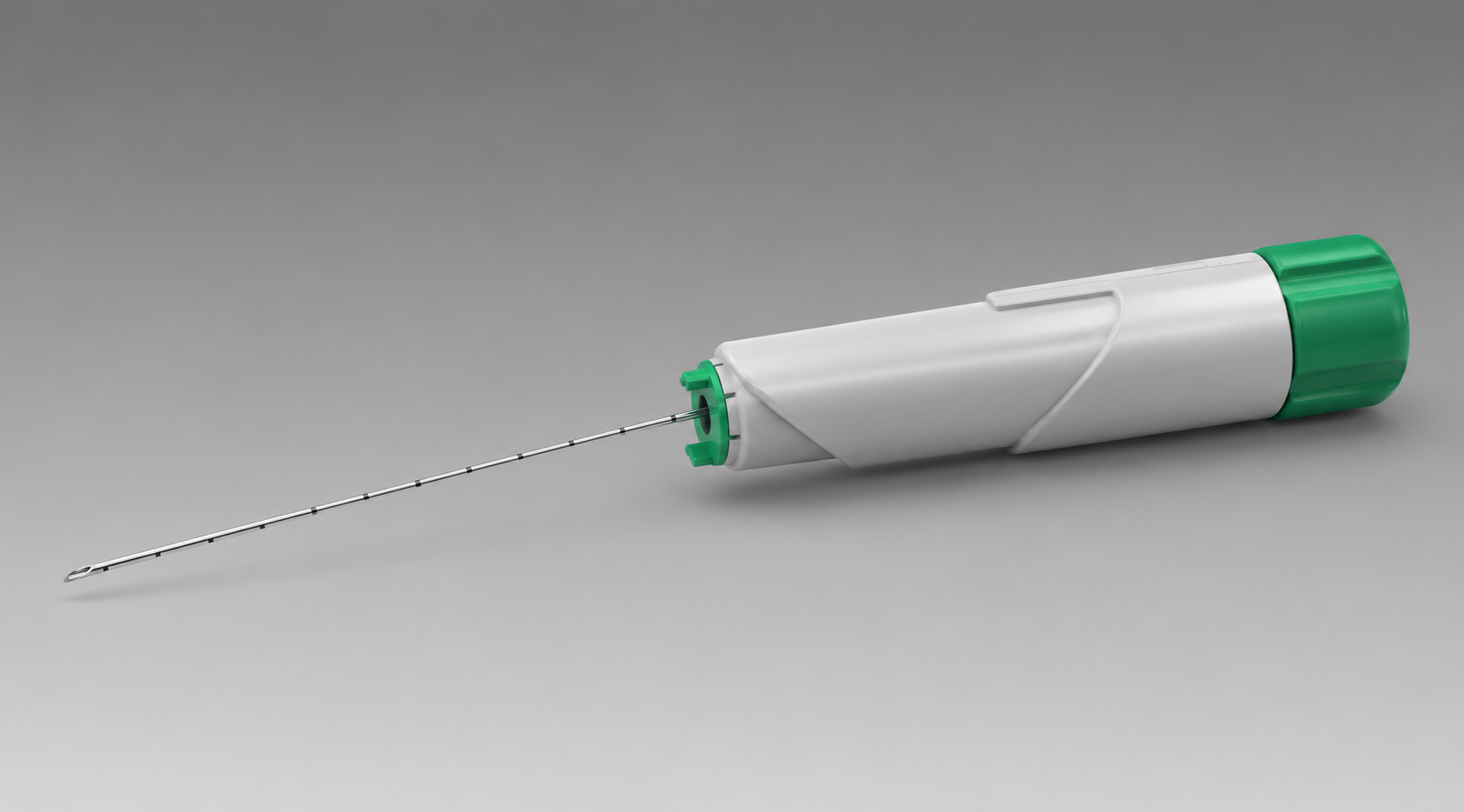
Biopsy needles occupy a specific position in the disposable medical device market: high clinical consequence, relatively low unit volume compared to consumables like swabs or blood tubes, and a procurement process that involves both clinical staff and supply chain teams. Understanding this market requires looking at the clinical trends driving it, not just the headline growth numbers.
Market Overview
The global biopsy needle market was valued at approximately USD 1.41 billion in 2025 and is projected to reach USD 2.06 billion by 2030, growing at a CAGR of around 7.8–7.9%. The broader biopsy devices segment, which includes vacuum-assisted systems and associated equipment, is forecast to reach USD 4.5–4.9 billion by 2034. Within this, needle-based instruments hold the largest product segment share.
The shift toward disposable needles — rather than reusable instruments — is a structural change that has been underway for over a decade and continues to accelerate. Infection control protocols, liability considerations, and the practical convenience of single-use devices have made reusable biopsy needles increasingly rare in high-volume clinical settings.
Clinical Demand Drivers
Rising cancer incidence. The WHO estimates global cancer cases will continue to rise through 2040. Breast, prostate, lung, and liver cancers — all of which frequently require tissue biopsy for staging and treatment planning — account for a large proportion of biopsy procedures performed globally. Earlier detection initiatives are increasing the number of patients entering diagnostic workups, which translates to higher biopsy volumes.
Image-guided procedure adoption. Ultrasound-guided and CT-guided biopsy procedures have become standard in most radiology departments. These techniques allow sampling of lesions that were previously inaccessible or required open surgical biopsy. The growth of image guidance has expanded the addressable patient population for percutaneous needle biopsy significantly.
Minimally invasive preference. Both clinicians and patients prefer approaches that reduce recovery time, hospital stay, and complication risk. Core needle biopsy and semi-automatic spring-loaded designs now represent the mainstream of tissue sampling for solid tumors, replacing open surgical biopsy in most routine diagnostic contexts.
Expansion in emerging markets. Asia-Pacific is growing at a CAGR of approximately 8.3–9.7% in key markets including China and India. Investments in cancer screening infrastructure, expansion of private diagnostic laboratories, and increased health insurance coverage are all contributing to procedure volume growth in these regions.
Semi-Automatic vs. Fully Automatic Designs
The choice between semi-automatic and fully automatic biopsy needles reflects both clinical preference and procedure context. Semi-automatic needles give the clinician more control over the firing mechanism, which can be advantageous in certain image-guided procedures where precise timing relative to imaging is important. Fully automatic designs standardize the throw distance and sample notch engagement, which can improve sample consistency in high-volume settings.
For distributors, understanding which design is standard in their target accounts — and whether those accounts have preferences around gauge, throw length, or coaxial compatibility — is necessary before specifying a product range.
What Procurement Teams Evaluate
Hospital and clinic procurement processes for biopsy needles typically involve input from the interventional radiology or surgical team alongside the supply chain function. Clinical staff evaluate firing consistency, sample quality (core integrity, crush artifact), echogenicity under ultrasound, and ergonomics. Procurement evaluates unit cost, sterility certification, shelf life, and supplier reliability.
For distributors, the ability to provide product samples for clinical evaluation — along with clear CE/ISO documentation — shortens the approval cycle. Accounts that have standardized on a particular gauge and throw length will generally not switch without a clinical trial period.
Changfeng Medical manufactures both semi-automatic and fully automatic core biopsy needles, along with bone marrow biopsy needles, with CE and ISO 13485 certification. Products are available in standard gauge and length configurations, with OEM options for distributors requiring private labeling. Contact us for product samples or technical specifications.