Blog
Nerve Block Needle Design: Echogenic Tips, Y-Connectors, and What Drives Ultrasound-Guided Anesthesia Adoption

Regional anesthesia has changed shape over the past decade in a way that shows up directly in needle design. Where peripheral nerve blocks once relied heavily on nerve stimulator feedback and anatomical landmarks alone, ultrasound guidance has become the dominant approach in most surgical and pain management settings — one survey of emergency medicine programs found essentially all responding institutions now perform ultrasound-guided nerve blocks, with close to a third performing five or more per month. The needles used for these blocks have been engineered to keep pace with that shift. For distributors and procurement teams sourcing anesthesia consumables, understanding why nerve block needles look and perform the way they do is useful context before evaluating a supplier.
The Echogenic Tip Made Ultrasound Guidance Practical
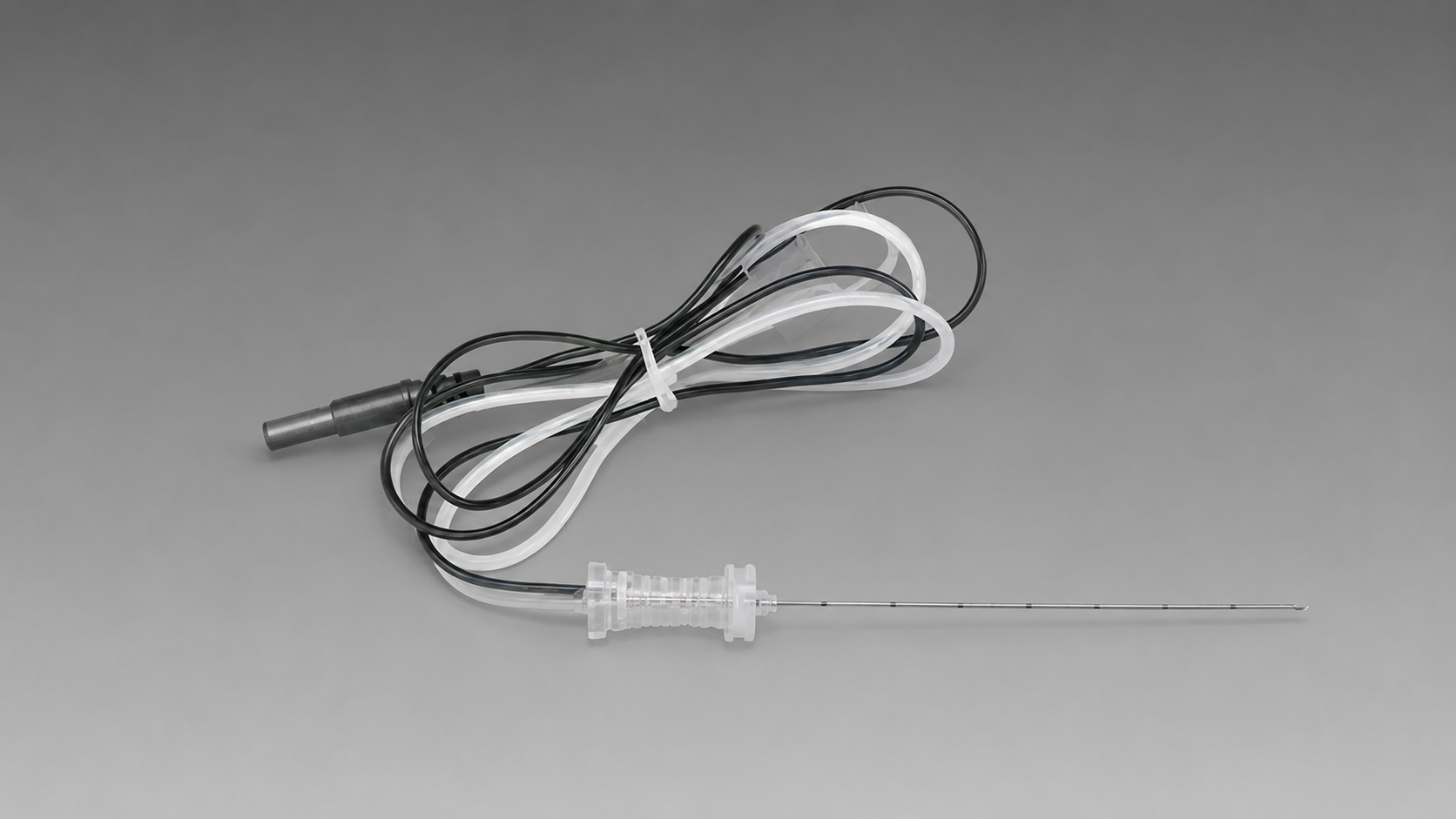
The defining feature of a modern nerve block needle is its echogenic tip. Standard needle surfaces reflect ultrasound waves poorly and inconsistently, which made early ultrasound-guided blocks difficult — anesthesiologists could see the target nerve clearly enough but struggled to track the needle tip itself as it approached. An echogenic tip is manufactured with a textured or etched surface designed specifically to scatter ultrasound waves back toward the probe, producing a needle image on the screen that is bright and unambiguous rather than faint and easily lost against surrounding tissue. This single design change is largely responsible for the confidence with which anesthesiologists now perform blocks that would have been considered technically demanding well before ultrasound-guided regional anesthesia became standard practice.
Short-Bevel Geometry and Why It Reduces Nerve Trauma Risk
The second defining feature is the short-bevel tip geometry, which differs meaningfully from the long, sharp bevel used on standard hypodermic needles. A short bevel produces more tactile feedback as the needle passes through different tissue planes — fascia, muscle, the perineural sheath — which experienced operators rely on alongside the ultrasound image to judge needle position. It also reduces the risk of nerve trauma if the needle tip does make contact with the nerve itself, since a long, sharp bevel is more likely to cut or pierce fascicles than a blunter, short-bevel design moving past them.
The Y-Connector Solves a Real Workflow Problem
The Y-connector hub is a practical feature that solves a workflow problem specific to regional anesthesia. Many nerve block procedures use a peripheral nerve stimulator to confirm proximity to the target nerve through observed muscle twitch, in addition to or instead of relying on ultrasound alone, particularly in deeper blocks or in patients where ultrasound visualization is difficult. Clinical literature on dual-guidance practice patterns shows many anesthesiologists continue combining both techniques rather than relying on ultrasound alone, even as ultrasound has become the primary tool. A Y-connector allows the nerve stimulator lead to stay attached to the needle while the anesthesiologist simultaneously injects local anesthetic through the same hub, without disconnecting and reconnecting components mid-procedure. Flexible extension tubing extends this convenience further, letting an assistant manage the syringe and injection while the proceduralist keeps both hands focused on needle position and the ultrasound probe — a division of labor that most regional anesthesia teams rely on for blocks that require sustained, steady positioning.
Why This Matters for Procurement, Not Just Clinical Practice
Multi-modal pain management built around regional anesthesia has been associated with shorter hospitalizations and reduced reliance on opioid analgesics following surgery, which is part of why nerve blocks have become a standard component of perioperative pain protocols rather than a specialty technique reserved for select cases. That shift in clinical practice translates directly into procurement volume — anesthesia and pain management departments that have built nerve blocks into routine perioperative care need a steady, properly sized supply rather than occasional special-order quantities.
Evaluating Suppliers in This Category
For distributors evaluating suppliers in this category, gauge and length range deserve the same scrutiny as with other interventional needles, since plexus blocks, peripheral nerve blocks at varying depths, and pain management procedures each call for different configurations. It’s also worth asking suppliers directly about echogenic tip consistency across production lots — a tip that scatters ultrasound well in a sample unit but inconsistently across a manufacturing run will generate complaints from anesthesiology departments quickly, since visibility under ultrasound is the entire value proposition of the product category. Buyers should also confirm sterilization method, individual packaging, and shelf life, all standard expectations for a disposable device used in sterile procedures.
Changfeng Medical manufactures nerve block needles with echogenic tip design, short-bevel geometry, Y-connector hubs, and flexible extension tubing, offered across multiple gauge and length configurations with EO sterilization and individual packaging. The product line carries ISO 13485 and CE certification, with OEM and private label arrangements available for distributors building a regional anesthesia portfolio.
Frequently Asked Questions
What makes a needle “echogenic”?
An echogenic needle has a textured or etched tip surface engineered to scatter ultrasound waves back toward the probe, producing a clear, bright image on the ultrasound screen. Standard smooth needle surfaces reflect ultrasound poorly and are harder to track during a procedure.
Why do nerve block needles use a short bevel instead of a standard sharp bevel?
A short bevel gives the operator more tactile feedback as the needle passes through tissue planes, and reduces the risk of cutting or piercing nerve fascicles if the tip contacts the nerve directly, compared to the longer, sharper bevel used on standard hypodermic needles.
What is the Y-connector hub used for on a nerve block needle?
The Y-connector allows a peripheral nerve stimulator lead to remain connected to the needle while local anesthetic is injected through the same hub, so the clinician doesn’t need to disconnect and reconnect components mid-procedure.
Is ultrasound guidance replacing nerve stimulators in regional anesthesia?
Ultrasound has become the primary guidance method for most peripheral nerve blocks, but many anesthesiologists continue using nerve stimulators alongside ultrasound rather than abandoning them entirely, particularly for deeper blocks where ultrasound visualization is more difficult.
Distributors interested in configuration options or sample requests can reach the team through the contact page.